Case file
Westall 1966
April 6, 1966 · Westall High School, Melbourne
On April 6, 1966, students and several adults at Westall described an object moving low over a nearby field, in some accounts descending before leaving abruptly. The case survived through witness numbers, local memory and repeated claims that officials moved quickly to contain the story.
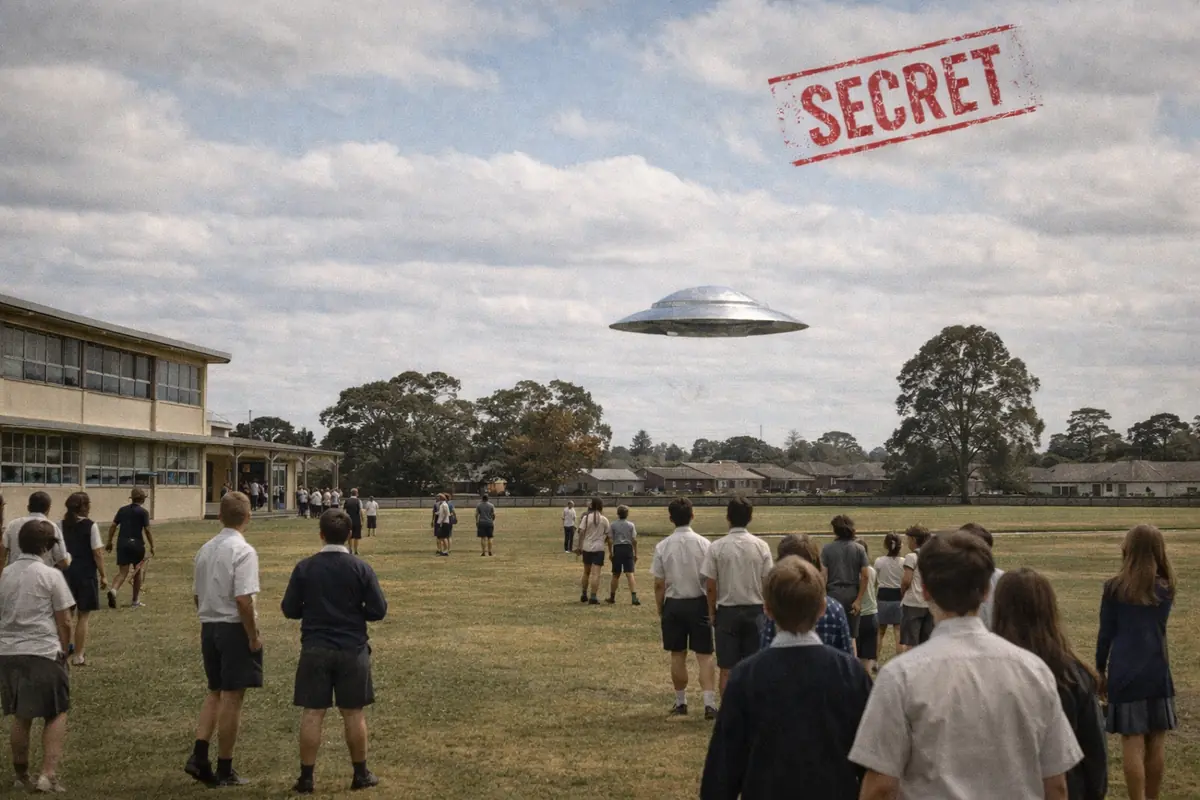
AI-generated illustration used to accompany this article.
Date
April 6, 1966
Location
Westall High School, Melbourne
Country
Australia
Category
School sighting
Status
Contested
Credibility
71/100
Notoriety
80/100
Coordinates
37.956° S · 145.119° E
Reading note
Why this file still matters
Westall remains Australia's best known school sighting because so many witnesses carried the same memory forward.
Timeline anchors
03
Distinct hypotheses
03
Sources used
03
Long summary
Narrative
A structured reading of the file, attentive to context, witnesses and the public circulation of the case.
Westall belongs to the rare class of daytime collective sightings. Students at the school, followed in memory by teachers and other adults, described a grey-silver object moving low over a nearby field, sometimes pausing or descending before accelerating away. Not every witness told the scene in exactly the same way, but the broad outline remained stable enough to fix the event in local history.
Part of the file's longevity comes from the number of people involved. Another part comes from what many of them later remembered next: a rapid official response and an effort to control how the incident was discussed. That second layer, whether read as management, caution or institutional discomfort, gave Westall a tone unlike many other schoolyard cases.
Over time, Westall became an Australian reference point not because it offered simple proof, but because it shows how a mass observation settles into community memory. The event lives in testimony, reunion narratives and school lore, with enough continuity to keep the case active decades after the day itself.
Timeline
Sequence of events
The steps retained here prioritize historical markers and the turning points in the public narrative.
Schoolday observation
Students and adults at Westall describe a low object moving over a nearby field on April 6, 1966.
Talk of official intervention
Witnesses later recall a fast response and an attempt to control the story.
The account becomes part of local memory
The case survives through testimony, retellings and Australian UFO culture.
Hypotheses
Interpretive frameworks
The hypotheses remain distinct from the factual narrative. They organize possible readings without erasing the blind spots.
Likelihood medium
Balloon, light aircraft or local experiment
A terrestrial object may have been seen under conditions that made it seem unusual.
Likelihood medium
Reconstructed collective memory
The event may have been reshaped over time by memory and retelling.
Likelihood low
Anomalous collective observation
The number of witnesses and the consistency of the core account still support an unexplained reading.
Sources
Documents and references
Historical sources, reports, archives and books used to structure this file.
Westall '66: A Suburban UFO Mystery
2010Documentary by Rosie Jones
Early Australian witness collections preserving the core testimony around the Westall event.
Australian UFO Research Notes on Westall
1966Private Australian archives
Documentation summarizing how school memory and the alleged official response became part of the case.
The Westall Incident
1966Melbourne press
Later overview explaining why Westall remains one of the most discussed Australian UFO cases.
Related cases
Related cases
Related cases connected by country, category or historical significance.

Valensole 1965
July 1, 1965 · France
Valensole became a French classic because an early-morning farm report stayed simple, stable and hard to dismiss outright.
Ariel School 1994
September 16, 1994 · Zimbabwe
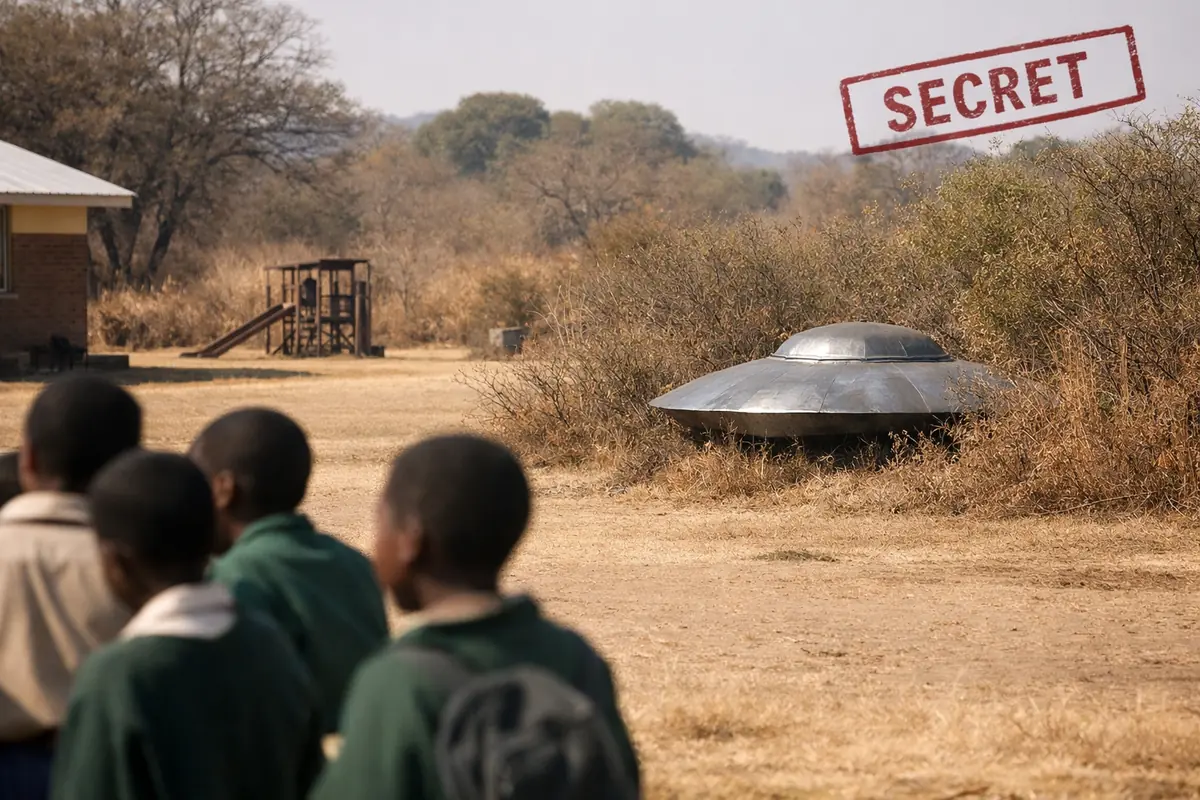
Ariel School became a global reference because dozens of children described the same playground disturbance within hours of it happening.