Case file
Exeter Incident
September 3, 1965 · Kensington / Exeter, New Hampshire
On the night of September 3, 1965, Norman Muscarello reported low red lights near Exeter, New Hampshire, and officers sent back with him said they saw the phenomenon as well. Blue Book files, Hynek's later treatment and John G. Fuller's account turned the incident into one of the signature close encounters of 1965.
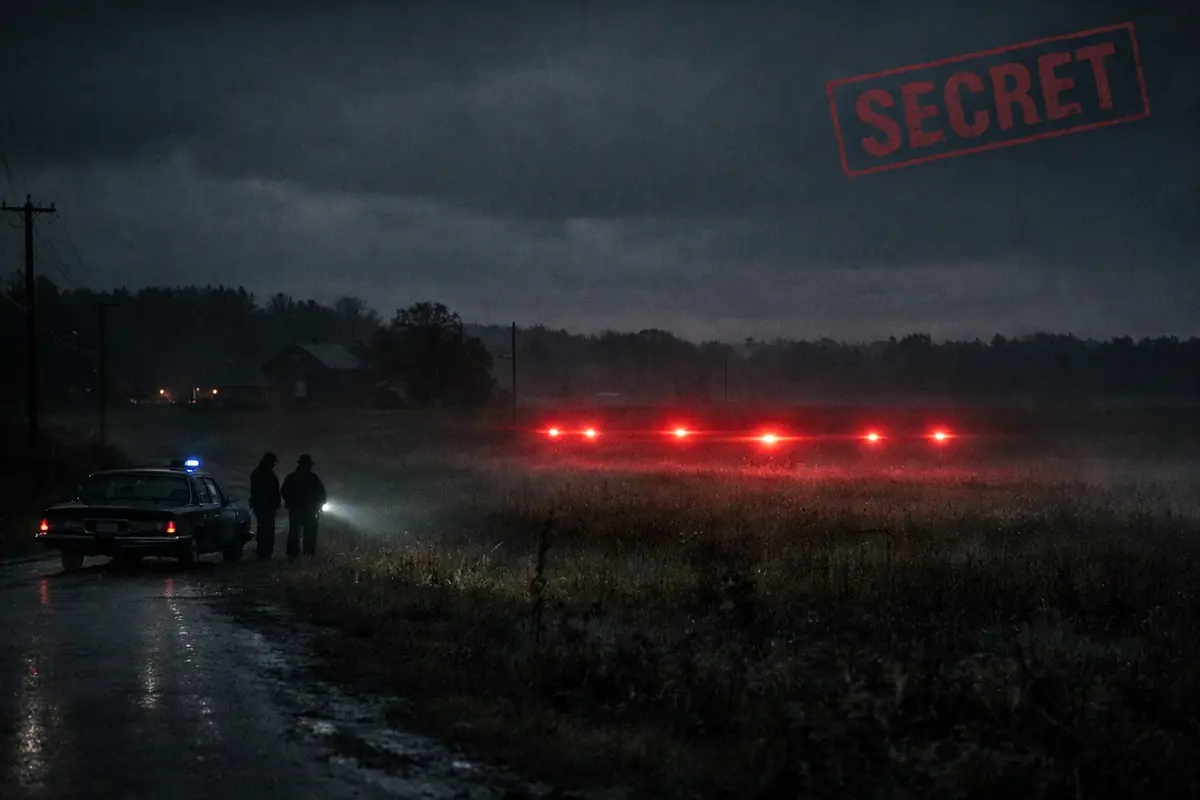
AI-generated illustration used to accompany this article.
Date
September 3, 1965
Location
Kensington / Exeter, New Hampshire
Country
United States
Category
Close encounter
Status
Unresolved
Credibility
73/100
Notoriety
88/100
Coordinates
42.981° N · 70.948° W
Reading note
Why this file still matters
Exeter became a classic when a teenager's alarm was echoed by two police officers on the same road.
Timeline anchors
03
Distinct hypotheses
03
Sources used
03
Long summary
Narrative
A structured reading of the file, attentive to context, witnesses and the public circulation of the case.
The Exeter case opens during the night of September 3, 1965, south of town on Route 150. Norman Muscarello, eighteen years old, said he saw a line of very bright red lights over a house and then a field, low enough and close enough to frighten him into diving into a ditch before running to the Exeter police station. The file begins as a raw roadside alarm, not as a polished UFO story.
Officer Eugene Bertrand, already aware that an upset motorist had earlier reported a light following her car, drove Muscarello back to the area. There, Bertrand said he also saw a red luminous object low over the terrain and called for assistance. Officer David Hunt later reported the same phenomenon. Later readings of the Blue Book material, especially by J. Allen Hynek, emphasize a plain but important point: the Air Force investigator at Pease treated the witnesses as stable and found no probable cause.
What followed was not only an inquiry into the sighting but an argument over how the Air Force managed it. Blue Book first floated stars, then aircraft associated with Operation Big Blast, explanations later challenged by critics and by Hynek's own account of the case as unidentified. Exeter remains important because the witness chain is so tight: a frightened young man, two police officers, official paperwork and no interpretation that ever fully closed the file.
Timeline
Sequence of events
The steps retained here prioritize historical markers and the turning points in the public narrative.
A red object appears on a rural road
The witness reports a large lighted object approaching his car near Exeter.
Police are called
The account is quickly passed to local authorities, giving the case unusual immediacy.
Hynek treats Exeter as a serious file
The investigation secures Exeter a place among the classic 1965 close encounters.
Hypotheses
Interpretive frameworks
The hypotheses remain distinct from the factual narrative. They organize possible readings without erasing the blind spots.
Likelihood high
Aircraft, light or roadside misread
A conventional object may have seemed extraordinary in the dark.
Likelihood medium
A vivid but ordinary close encounter memory
The witness may have experienced a real but misinterpreted event.
Likelihood low
Unresolved close encounter
The police call and witness consistency keep the case open.
Sources
Documents and references
Historical sources, reports, archives and books used to structure this file.
The Hynek UFO Report (chapter on Exeter)
1977J. Allen Hynek / NICAP archive
Initial case material preserving the police-linked chronology of the Exeter report.
Open sourceIncident at Exeter
1966Book by John G. Fuller
Hynek's later analysis, especially useful on witness reliability and Air Force handling of the file.
UFO Report: Sept. 3, 1965, 3 miles SW of Exeter, New Hampshire
1965Project Blue Book documents / NICAP archive
Subsequent retellings that placed Exeter among the defining close encounters of the 1965 wave.
Open sourceRelated cases
Related cases
Related cases connected by country, category or historical significance.
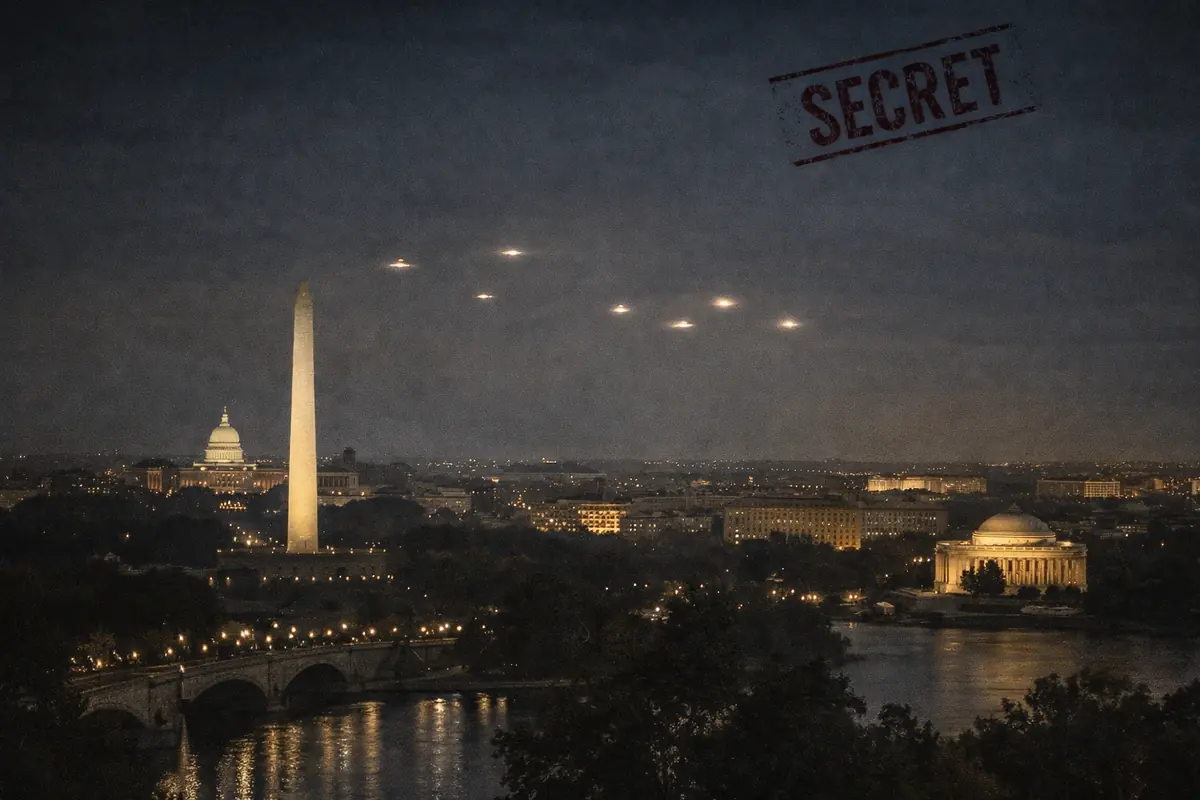
Washington D.C. Radar-Visual Wave
July 19, 1952 · United States
Washington 1952 put UFOs over the US capital and forced the Air Force to answer in public.
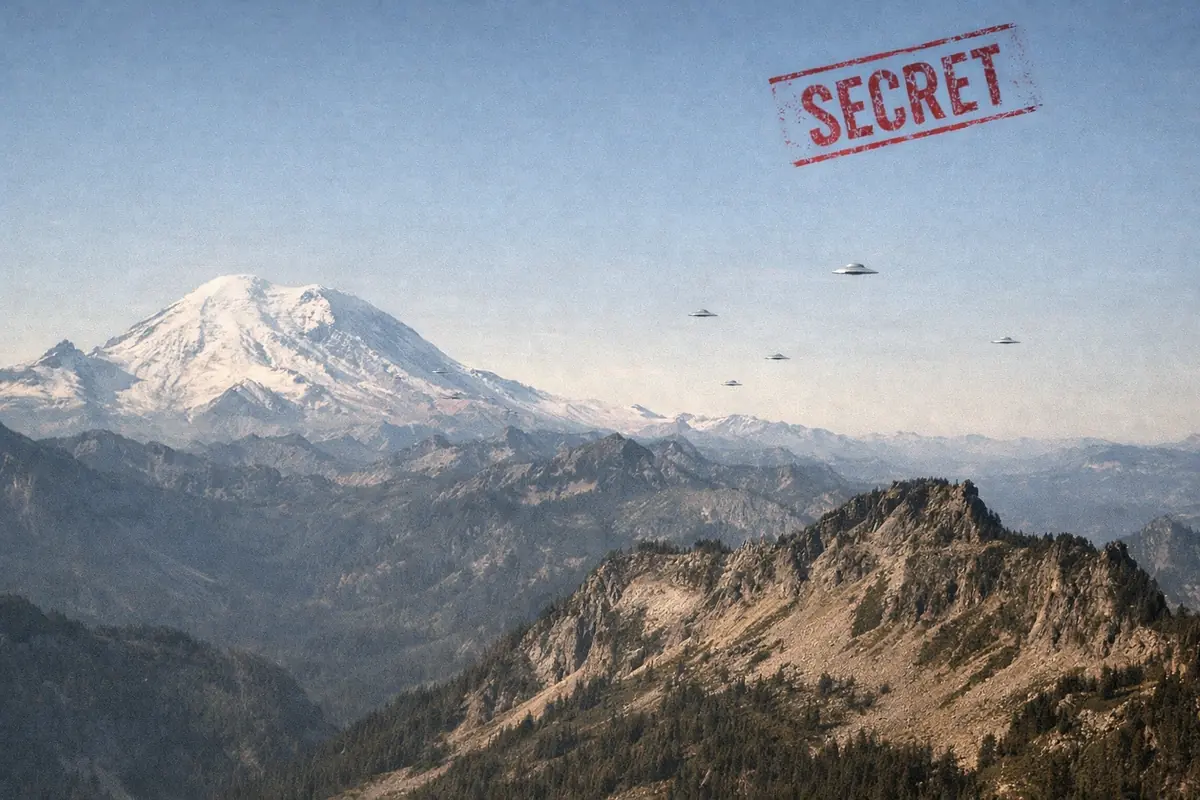
Kenneth Arnold Sighting
June 24, 1947 · United States
Arnold's June 1947 report mattered because it gave the postwar world the phrase flying saucer.
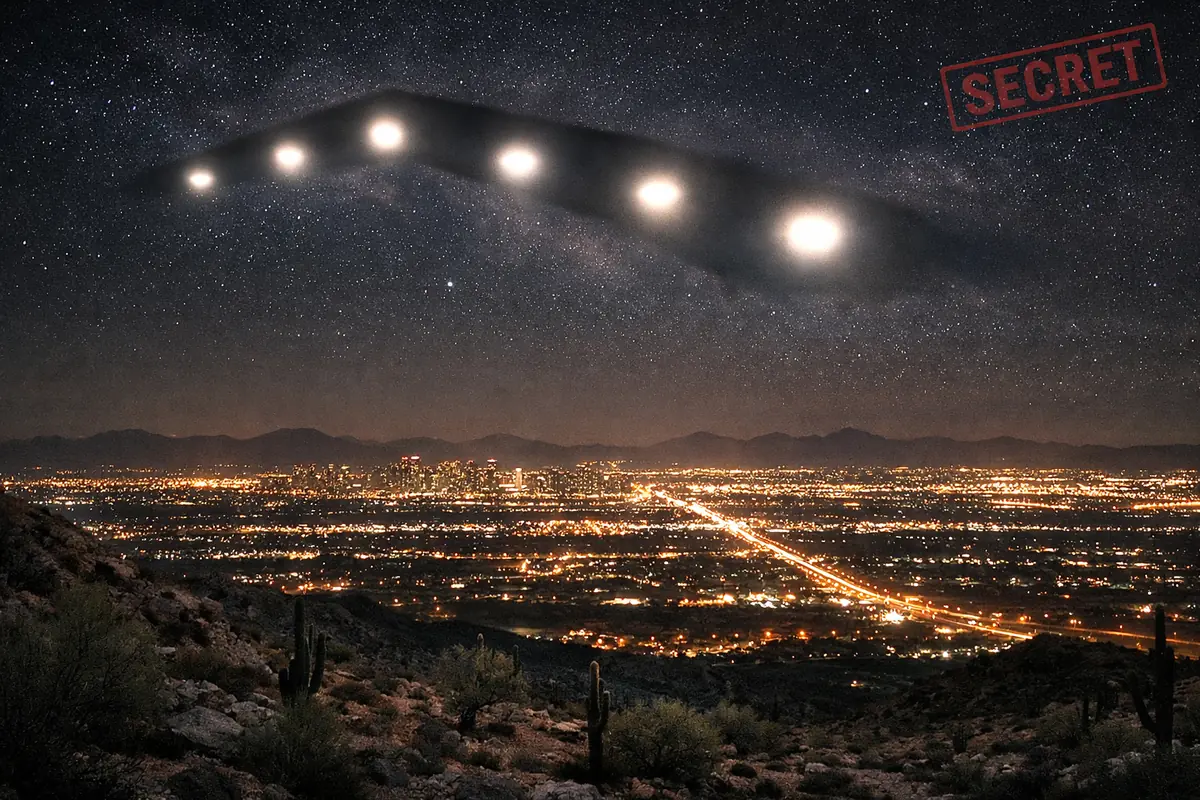
Phoenix Lights
March 13, 1997 · United States
Phoenix Lights lasted because one Arizona night seems to contain both a statewide transit and the famous stationary lights over the city.