Case file
Japan Airlines Flight 1628
November 17, 1986 · Air corridor above Alaska
On November 17, 1986, the crew of Japan Air Lines Flight 1628 reported unusual lights and a much larger object while crossing Alaska. Cockpit testimony, air-traffic exchanges and disputed radar interpretations turned the incident into one of the major civilian aviation cases of the 1980s.
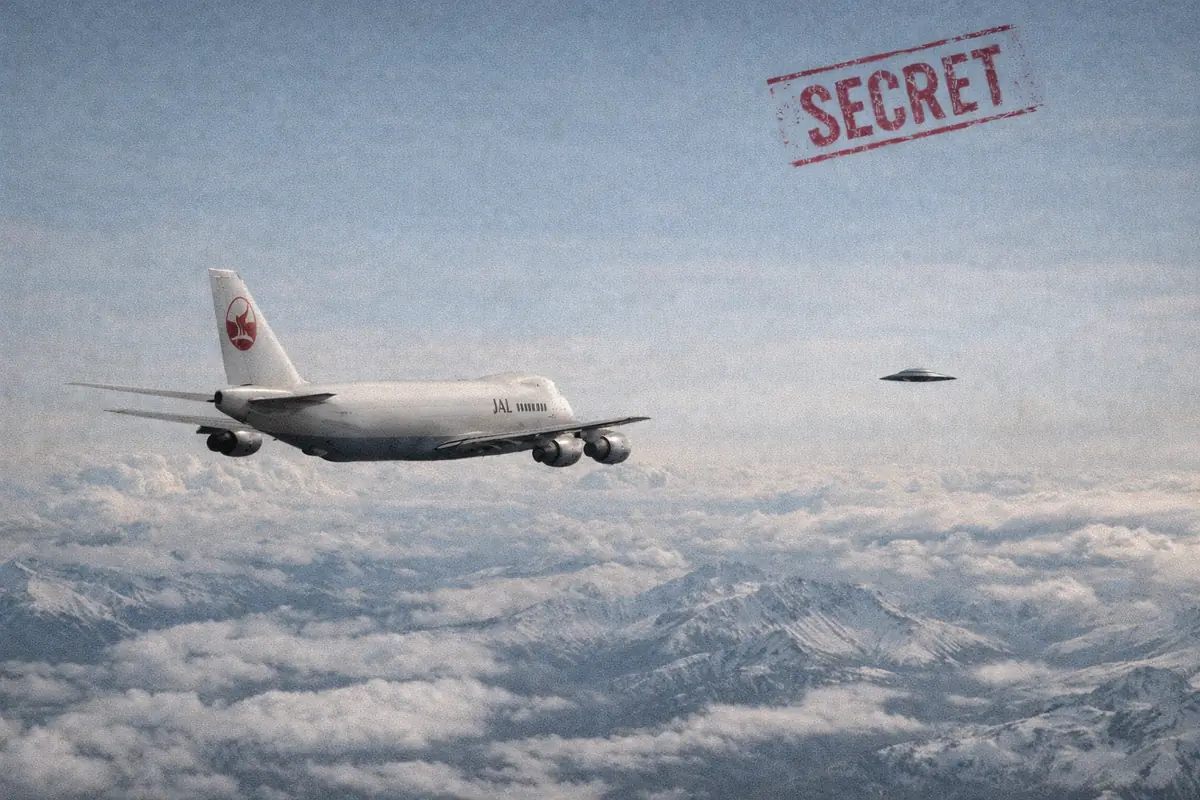
AI-generated illustration used to accompany this article.
Date
November 17, 1986
Location
Air corridor above Alaska
Country
United States
Category
Aircrew encounter
Status
Investigated
Credibility
78/100
Notoriety
82/100
Coordinates
66.565° N · 145.249° W
Reading note
Why this file still matters
JAL 1628 stands out because a cargo crew described a long aerial encounter inside a fully documented civil-aviation setting.
Timeline anchors
03
Distinct hypotheses
03
Sources used
03
Long summary
Narrative
A structured reading of the file, attentive to context, witnesses and the public circulation of the case.
Captain Kenju Terauchi first described two nearby lights and later a much larger object seen at a distance while JAL Flight 1628 crossed Alaska. Very quickly, the incident became inseparable from the exchanges with air-traffic control and from the question of what radar systems did or did not confirm. That link between direct perception and technical follow-up is what gave the case its durable shape.
The file remains compelling because it unfolded inside a civil-aviation environment designed to reduce casual error. A cargo crew reported the event in operational language, controllers were drawn into the sequence, and later documentation tried to determine how far the radar material could be trusted. Even then, the interpretations never aligned cleanly.
JAL 1628 still matters because it stages a long, collective observation in a context where each exchange is in principle recordable and reviewable. Its force comes less from spectacle than from procedure: a cockpit report serious enough to become an aviation archive and ambiguous enough to remain disputed.
Timeline
Sequence of events
The steps retained here prioritize historical markers and the turning points in the public narrative.
The crew reports a large object
While over Alaska, Flight 1628 describes a huge presence that seems to pace the aircraft.
Air traffic and radar discussions follow
Controllers and later analysts review what the crew saw and what instruments might have captured.
The incident becomes a benchmark airline case
Its professional witnesses and preserved record make it one of the best known aviation files.
Hypotheses
Interpretive frameworks
The hypotheses remain distinct from the factual narrative. They organize possible readings without erasing the blind spots.
Likelihood medium
Astronomical or atmospheric misread
Lights over Alaska may have been misread under unusual flight conditions.
Likelihood medium
Large conventional aircraft or sensor confusion
A terrestrial aircraft or radar artefact may explain part of the event.
Likelihood low
Genuinely unusual air encounter
The crew's consistency keeps the case open to an unexplained reading.
Sources
Documents and references
Historical sources, reports, archives and books used to structure this file.
FAA records on Japan Airlines Flight 1628
1986Federal Aviation Administration
Crew statements and preserved airline documentation from the Alaska flight itself.
Dispatches from the Alaska Incident
1987American aviation press
Official and investigative reviews weighing the cockpit report against the radar discussion.
The UFO Evidence, Volume II
2000NICAP
Later case histories explaining why JAL 1628 became a benchmark aviation sighting.
Related cases
Related cases
Related cases connected by country, category or historical significance.
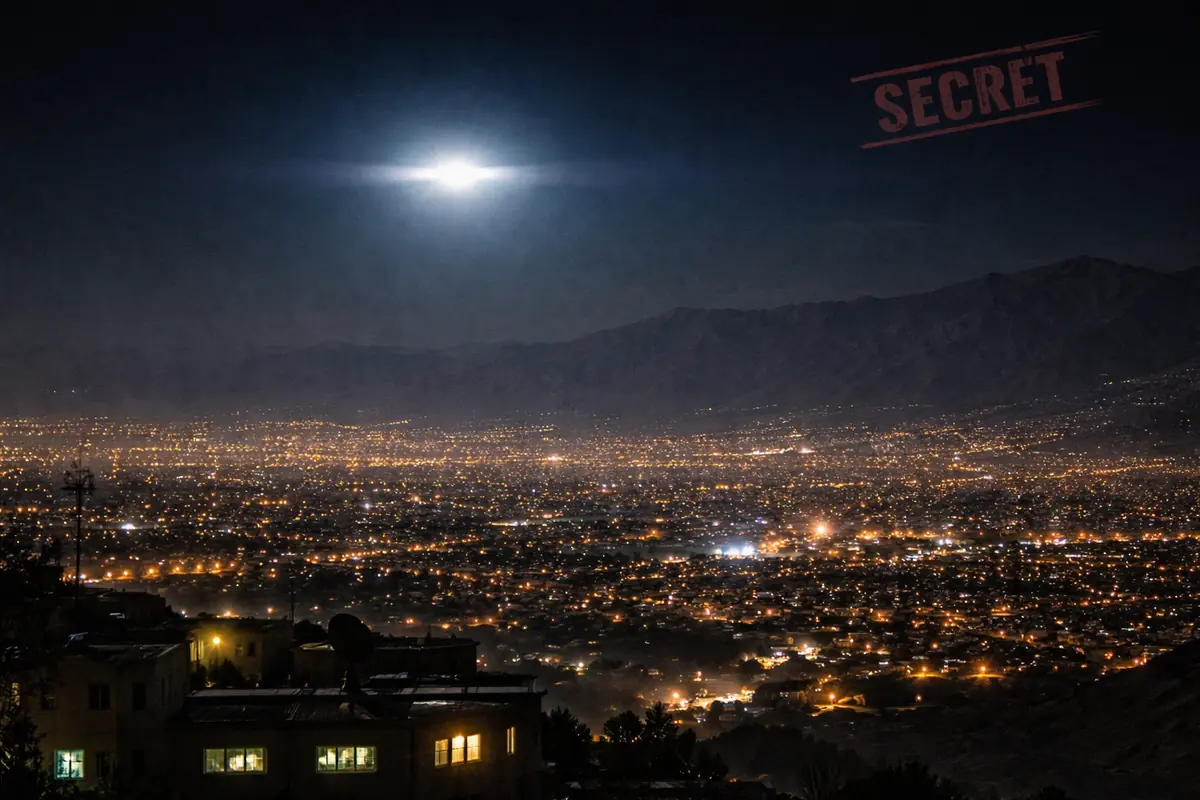
Tehran 1976
September 19, 1976 · Iran
Tehran 1976 became a military classic because civilian reports escalated into fighter intercepts and a diplomatic record.
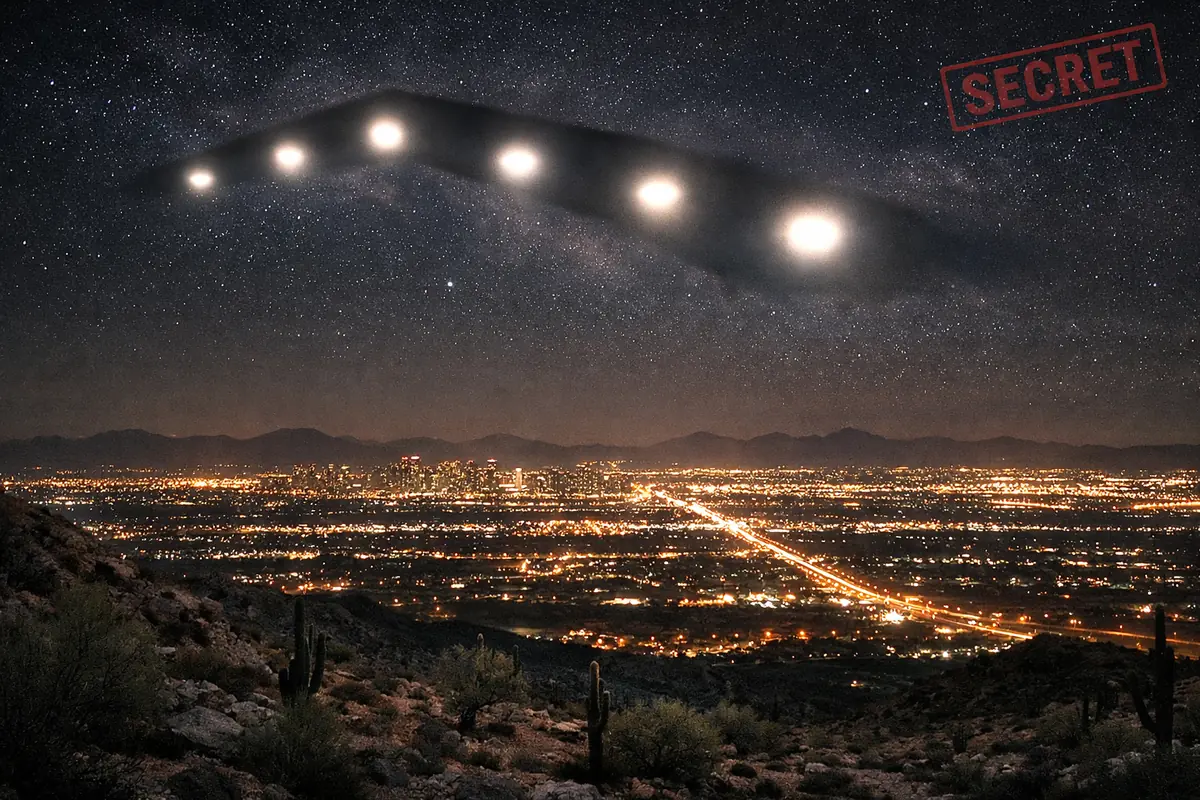
Phoenix Lights
March 13, 1997 · United States
Phoenix Lights lasted because one Arizona night seems to contain both a statewide transit and the famous stationary lights over the city.
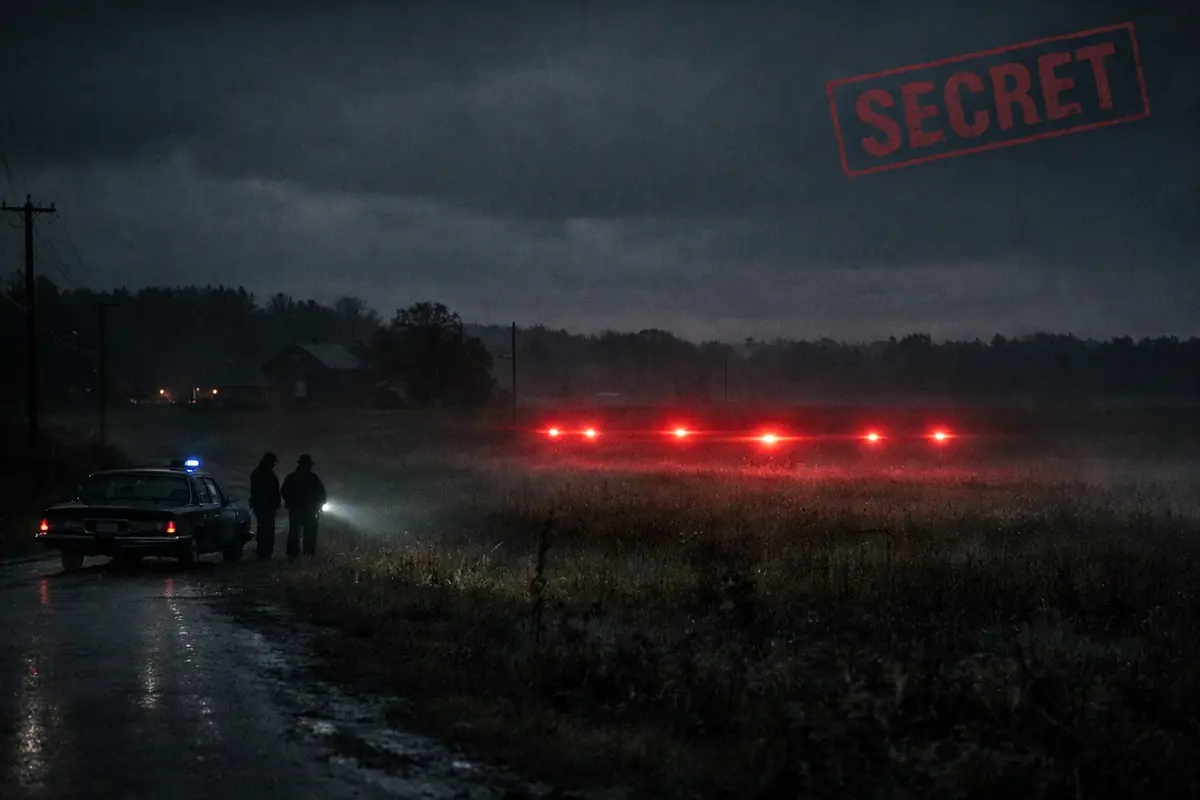
Exeter Incident
September 3, 1965 · United States
Exeter became a classic when a teenager's alarm was echoed by two police officers on the same road.