Case file
Tehran 1976
September 19, 1976 · Tehran, Iran
During the night of September 18-19, 1976, reports of a bright object over Tehran led to Iranian Air Force intercept attempts. Pilots later described instrument problems on approach, and a US diplomatic summary helped turn the incident into one of the most cited military UFO cases of the 1970s.

AI-generated illustration used to accompany this article.
Date
September 19, 1976
Location
Tehran, Iran
Country
Iran
Category
Military observation
Status
Investigated
Credibility
82/100
Notoriety
88/100
Coordinates
35.689° N · 51.389° E
Reading note
Why this file still matters
Tehran 1976 became a military classic because civilian reports escalated into fighter intercepts and a diplomatic record.
Timeline anchors
03
Distinct hypotheses
03
Sources used
03
Long summary
Narrative
A structured reading of the file, attentive to context, witnesses and the public circulation of the case.
The Tehran file begins with civilian calls reporting an unusual light above the capital. The alert moved rapidly through military channels, a control tower confirmed that something abnormal was visible, and Iranian F-4s were sent up to investigate. The most cited versions of the case describe a difficult approach to a bright target and, during the pursuit, the appearance of a secondary object as well.
What gave the incident its special status was the pilots' description of instrument disruption as they closed in. Later, a US diplomatic report summarized the affair and gave it an audience far beyond Iran. From that point on, Tehran entered the international UFO record not just as a local night alert, but as a formally documented military encounter.
The diplomatic summary does not settle the case by itself, and the details vary from source to source. But the file remains important because it shows that an apparently serious aerial incident was treated seriously at several institutional levels. Tehran stands at the intersection of visual testimony, military procedure and administrative trace, without ever quite collapsing into a single agreed explanation.
Timeline
Sequence of events
The steps retained here prioritize historical markers and the turning points in the public narrative.
Bright object reported over the city
Witnesses describe a luminous target above Tehran on the night of September 19, 1976.
F-4 intercepts are launched
Iranian jets attempt to approach the object, but the run is disrupted by instrument issues.
Military reports document the incident
The file is preserved as a rare example of a formally recorded Middle Eastern radar visual case.
Hypotheses
Interpretive frameworks
The hypotheses remain distinct from the factual narrative. They organize possible readings without erasing the blind spots.
Likelihood medium
Bright conventional aircraft or star-like stimulus
A conventional object may have appeared extraordinary because of distance and lighting.
Likelihood medium
Radar and cockpit anomaly
Part of the event may be tied to sensor or instrument behaviour under stress.
Likelihood low
Genuinely anomalous military encounter
The coordinated reports still leave room for an unresolved aerial incident.
Sources
Documents and references
Historical sources, reports, archives and books used to structure this file.
Defense Intelligence Agency message on the Tehran incident
1976US diplomatic archives
Military documentation preserving the radar-visual sequence and the Iranian response.
UFOs and the National Security State
2002Book by Richard Dolan
Later study focused on the pilots' reports, the intercept sequence and the instrument anomalies.
Analysis of the Tehran case
1977International ufology studies
Reference synthesis explaining why Tehran became one of the major international military files.
Related cases
Related cases
Related cases connected by country, category or historical significance.
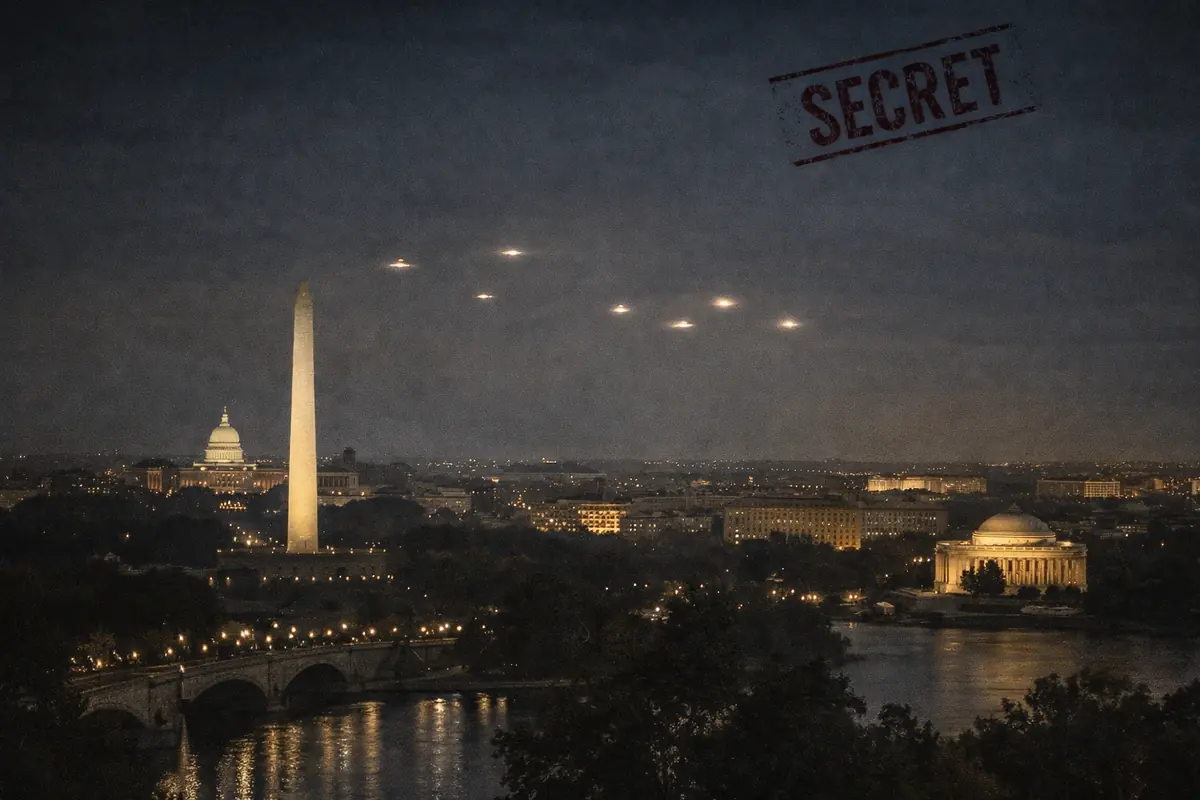
Washington D.C. Radar-Visual Wave
July 19, 1952 · United States
Washington 1952 put UFOs over the US capital and forced the Air Force to answer in public.
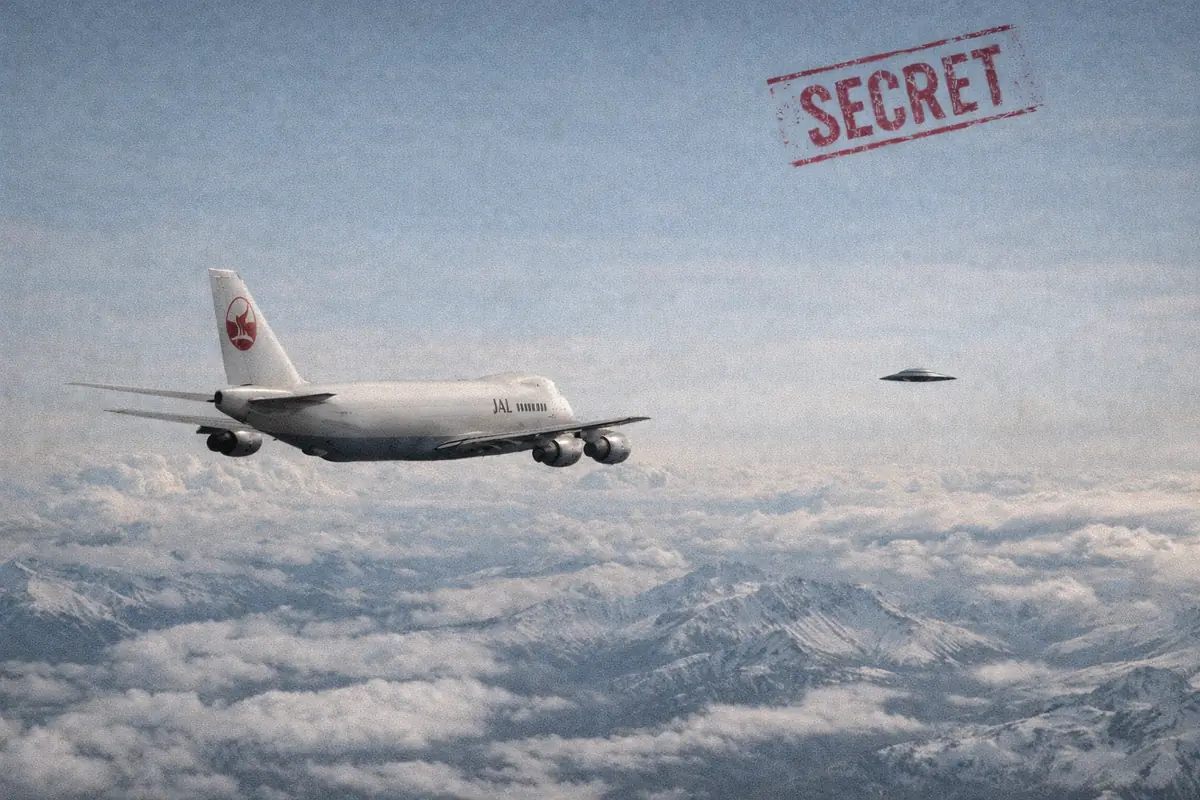
Japan Airlines Flight 1628
November 17, 1986 · United States
JAL 1628 stands out because a cargo crew described a long aerial encounter inside a fully documented civil-aviation setting.

Rendlesham Forest
December 26, 1980 · United Kingdom
Rendlesham stayed alive because it was not one sighting but a chain of military nights, memos and competing explanations.