Case file
McMinnville UFO Photographs
May 11, 1950 · Near Sheridan / McMinnville, Oregon
On May 11, 1950, Paul Trent photographed an unusual object above his property after his wife called him outside. Local publication, national reprinting and decades of technical argument made the images one of the emblematic photographic files of the postwar period.
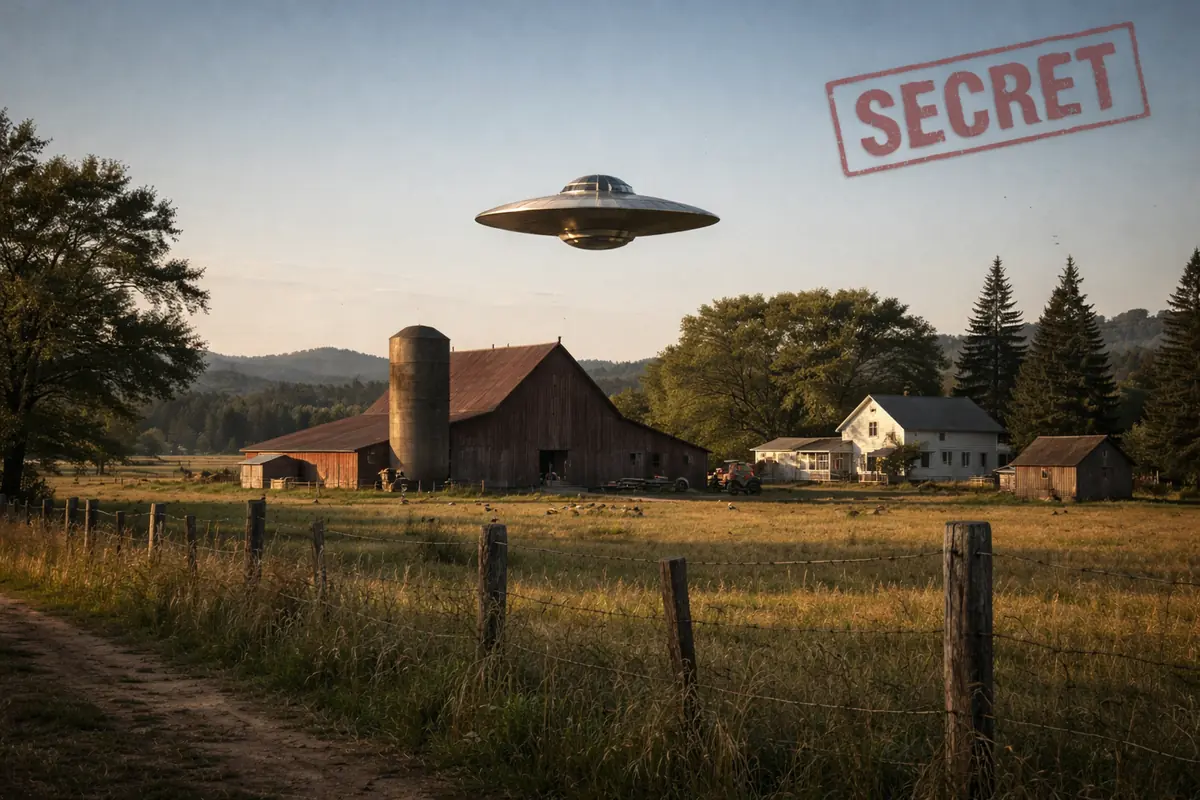
AI-generated illustration used to accompany this article.
Date
May 11, 1950
Location
Near Sheridan / McMinnville, Oregon
Country
United States
Category
Close encounter
Status
Contested
Credibility
69/100
Notoriety
88/100
Coordinates
45.103° N · 123.337° W
Reading note
Why this file still matters
McMinnville endures because two clear photographs moved a small Oregon sighting into the center of the UFO photo debate.
Timeline anchors
03
Distinct hypotheses
03
Sources used
03
Long summary
Narrative
A structured reading of the file, attentive to context, witnesses and the public circulation of the case.
The McMinnville file begins on a rural property near Sheridan, not far from the Oregon town that gave the case its name. Early in the evening, Evelyn Trent noticed an unusual object in the sky and called her husband. Paul Trent took the family camera and made two photographs within moments, from nearly the same position. The event itself was brief, but the existence of the images changed the case immediately: this was no longer only a witness report, but a visual file destined to circulate well beyond the local setting.
The photographs first appeared in the regional press and later reached a national audience, especially after publication in Life. That move from local curiosity to national image is what fixed McMinnville in UFO history. From then on, the debate shifted away from recollection alone and toward photogrammetry, shadows, terrain and the probable distance or size of the object.
What kept the case open was the lack of agreement in those technical readings. William Hartmann, writing for the Condon Report, treated the photographs as among the strongest in the corpus. Other analysts argued instead for a small suspended model or some other domestic staging. McMinnville still matters because it forces a hard historical question: when a photograph is clear but isolated, what exactly does it prove?
Timeline
Sequence of events
The steps retained here prioritize historical markers and the turning points in the public narrative.
Two photographs are taken
Paul Trent photographs the object twice on May 11, 1950, after his wife spots it.
The images circulate in the press
Local publication turns the file into a national UFO photo case.
Technical debate continues for decades
Experts disagree on whether the object was real, suspended or staged.
Hypotheses
Interpretive frameworks
The hypotheses remain distinct from the factual narrative. They organize possible readings without erasing the blind spots.
Likelihood medium
A real object photographed at a distance
The images may show a genuine object seen far enough away to be hard to identify.
Likelihood medium
Small model or suspended setup
The photographs may have been created through a close-range mock-up.
Likelihood low
A photograph that cannot be settled definitively
The technical record still leaves the file open to different readings.
Sources
Documents and references
Historical sources, reports, archives and books used to structure this file.
Condon Report, Case 46 McMinnville, Oregon
1968University of Colorado UFO Project
Condon Report discussion of McMinnville, useful for the strongest technical defense of the photographs.
Open sourceOregon McMinnville-UFO Case, 1950-1983
1983American Philosophical Society
Archival file bringing the Trent photographs together with later commentary and disputes.
Open sourceTrent / McMinnville Photos
1950NICAP archive
Reference collection that helped preserve the images as a long-term photographic case study.
Open sourceRelated cases
Related cases
Related cases connected by country, category or historical significance.
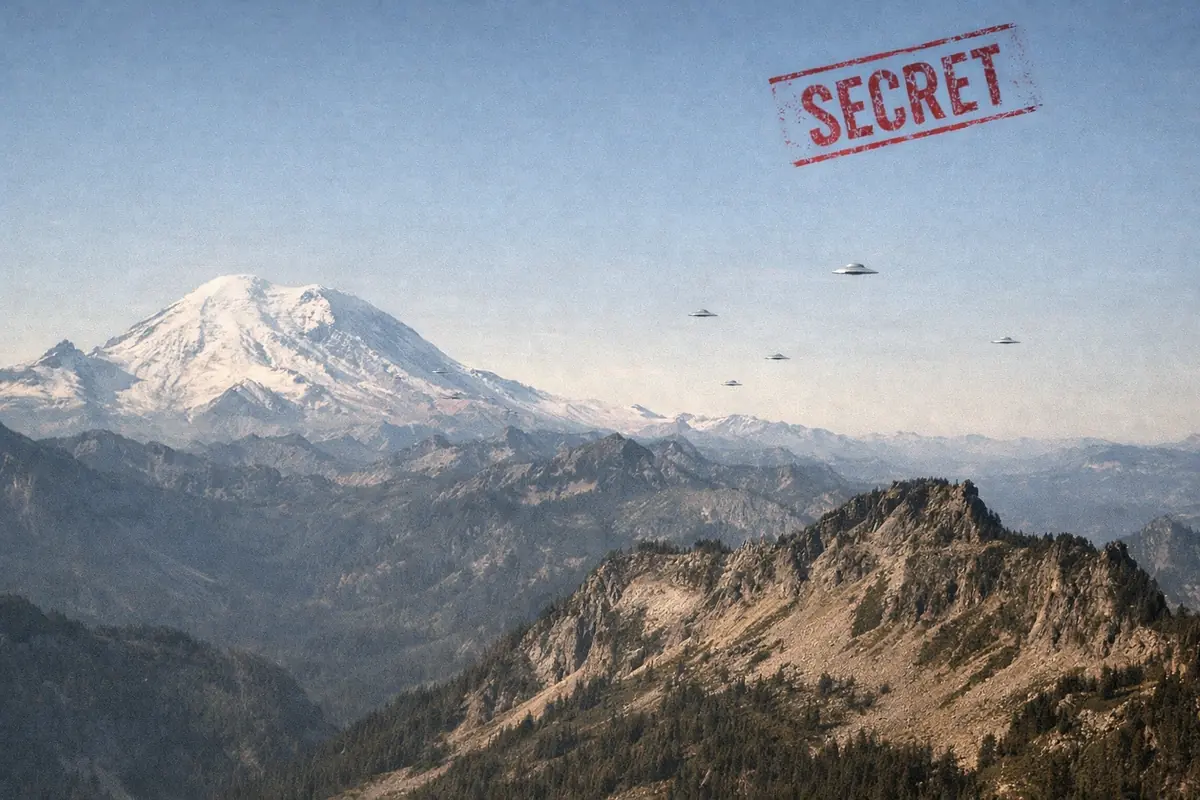
Kenneth Arnold Sighting
June 24, 1947 · United States
Arnold's June 1947 report mattered because it gave the postwar world the phrase flying saucer.
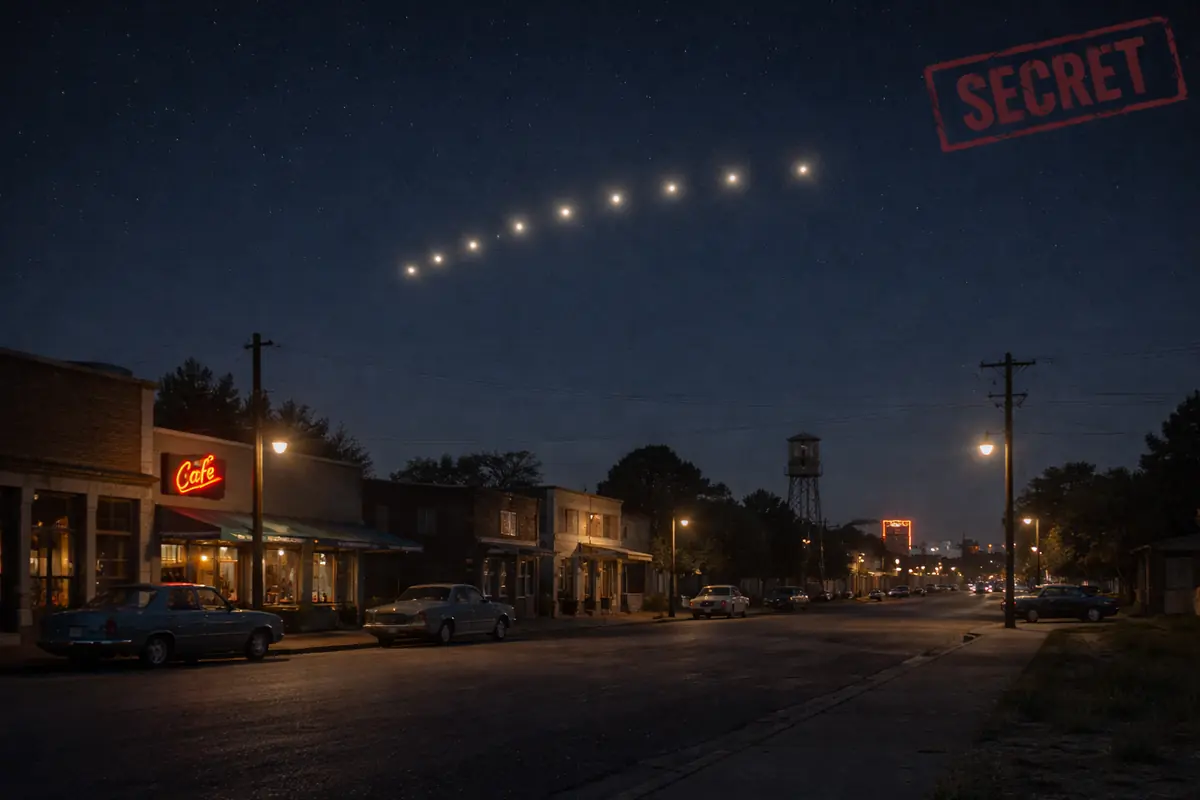
Lubbock Lights
August 25, 1951 · United States
Lubbock stayed important because repeated light formations were seen by respected witnesses and then photographed.
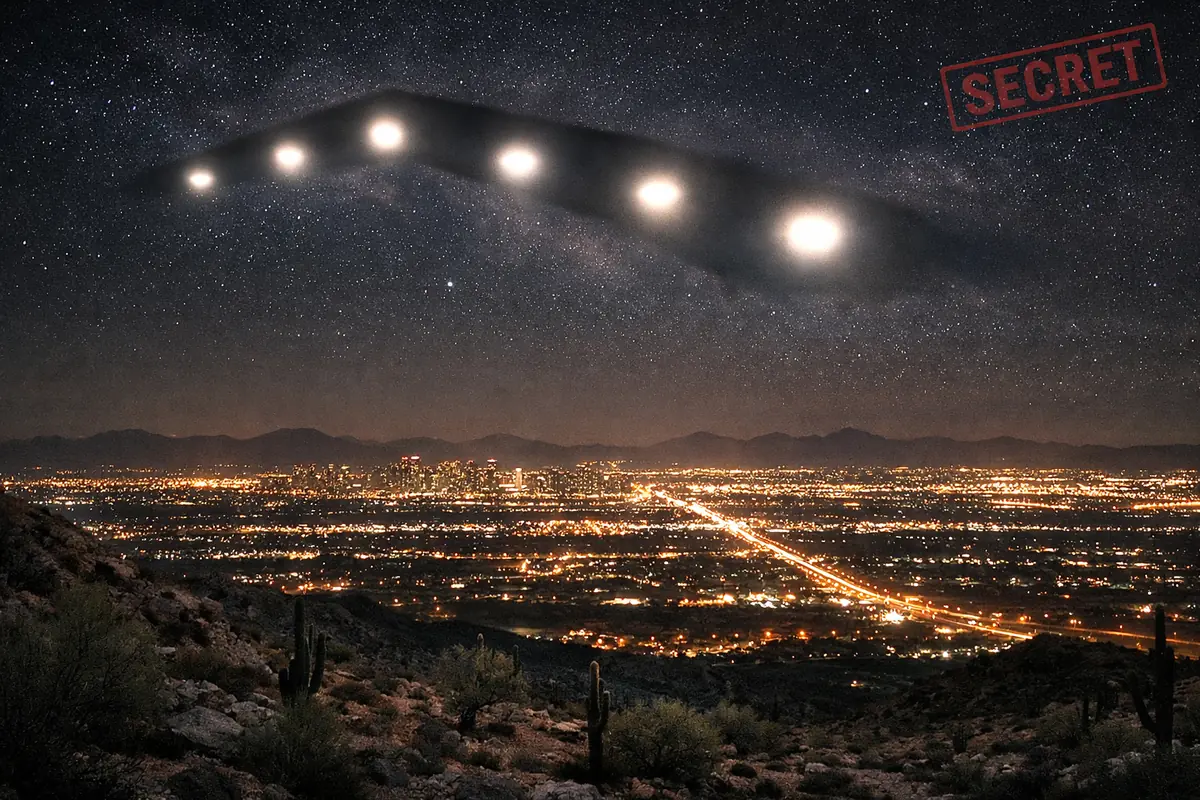
Phoenix Lights
March 13, 1997 · United States
Phoenix Lights lasted because one Arizona night seems to contain both a statewide transit and the famous stationary lights over the city.