Case file
Roswell Incident
July 8, 1947 · Roswell Army Air Field, New Mexico
In July 1947, debris recovered near Roswell led the local Army air base to announce a captured flying disc and then retreat the same day to a weather-balloon explanation. That reversal, later reframed through witness testimony and Project Mogul, turned a brief press episode into the archetypal American UFO controversy.
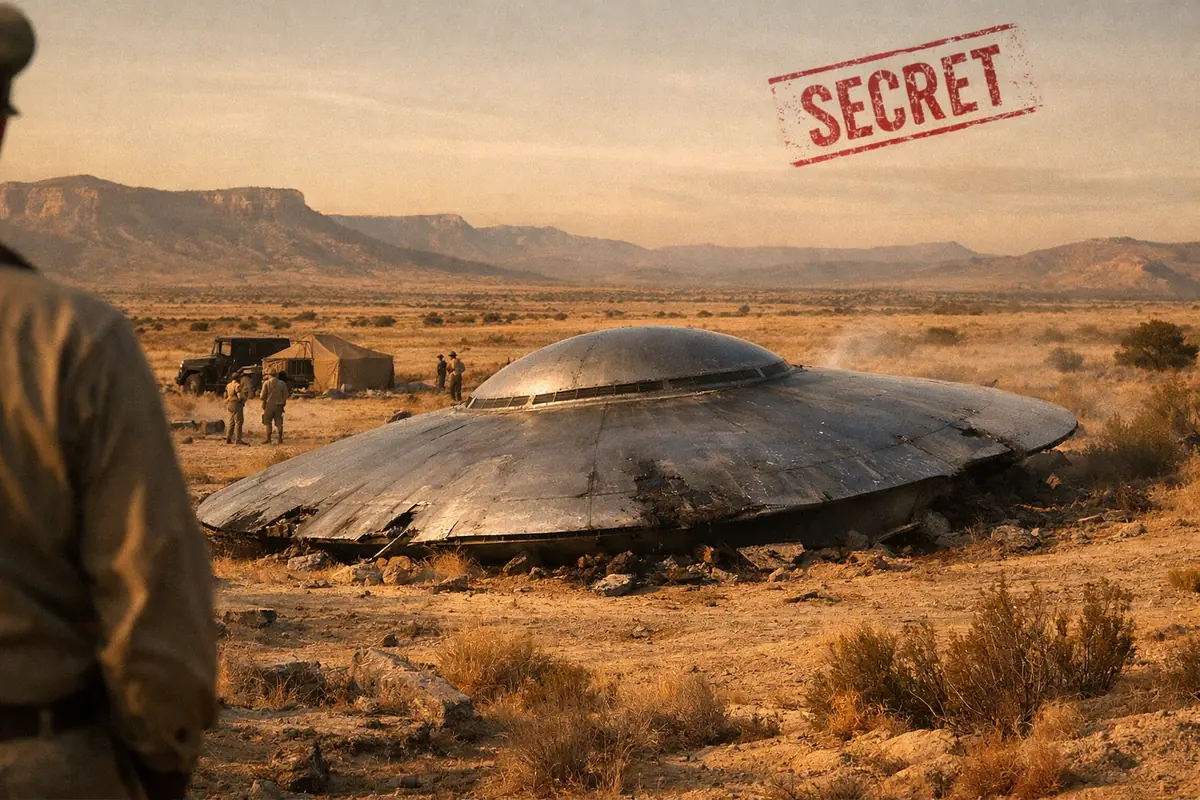
AI-generated illustration used to accompany this article.
Date
July 8, 1947
Location
Roswell Army Air Field, New Mexico
Country
United States
Category
Crash / recovery
Status
Contested
Credibility
58/100
Notoriety
100/100
Coordinates
33.394° N · 104.523° W
Reading note
Why this file still matters
Roswell entered UFO history because the Army said 'flying disc' before reversing itself within hours.
Timeline anchors
03
Distinct hypotheses
03
Sources used
03
Long summary
Narrative
A structured reading of the file, attentive to context, witnesses and the public circulation of the case.
The Roswell file begins with debris gathered from a ranch in southeastern New Mexico and passed up to Roswell Army Air Field. On July 8, 1947, the base issued the phrase that fixed the case in history: it said it had recovered a flying disc. By the end of the day, photographs and a press presentation had already moved the official story to a weather balloon. The public record therefore opens not with one explanation, but with two incompatible ones issued within hours.
That contradiction is what gave Roswell its unusual durability. In the decades that followed, the case absorbed late witness testimony, Cold War speculation and the prestige of a base associated with the nuclear age. When Project Mogul was later disclosed and advanced as the likely source of the debris, the argument did not end; it simply changed form, with one side treating the disclosure as the missing answer and the other as only a partial cover story.
Roswell matters less as a single sighting than as a template. It shows how military communication, fragmentary evidence and retrospective memory can turn a short 1947 episode into a permanent historical dispute. That is why nearly every modern history of UFO culture still begins there.
Timeline
Sequence of events
The steps retained here prioritize historical markers and the turning points in the public narrative.
Debris reported on a ranch
Unusual fragments are reported near Roswell Army Air Field and passed up the chain of command.
Press release mentions a flying disc
The base's public statement briefly uses the language of a recovered flying disc.
Weather balloon explanation replaces the first version
The official narrative is corrected almost immediately, later joined by the Project Mogul explanation.
Hypotheses
Interpretive frameworks
The hypotheses remain distinct from the factual narrative. They organize possible readings without erasing the blind spots.
Likelihood high
Project Mogul and classified material
The debris may have come from a secret high-altitude balloon program and associated equipment.
Likelihood medium
Amplified misreading and rumor
The mix of technical debris, local rumor and media escalation may have produced an oversized story.
Likelihood low
Recovery of genuinely unusual material
Some readers still argue that the first reactions point to material not fully explained by the later official story.
Sources
Documents and references
Historical sources, reports, archives and books used to structure this file.
The Roswell Report: Fact vs Fiction in the New Mexico Desert
1995U.S. Air Force
Air Force reconstruction of the 1947 debris recovery and the shift from the first press release to the balloon explanation.
Roswell in Perspective
1997National Archives
Historical study tracing the witness testimony, the military context and Roswell's long afterlife in public memory.
The Roswell Incident
1980Book by Charles Berlitz and William L. Moore
Early synthesis showing how Roswell became a founding reference point in modern UFO history.
Related cases
Related cases
Related cases connected by country, category or historical significance.
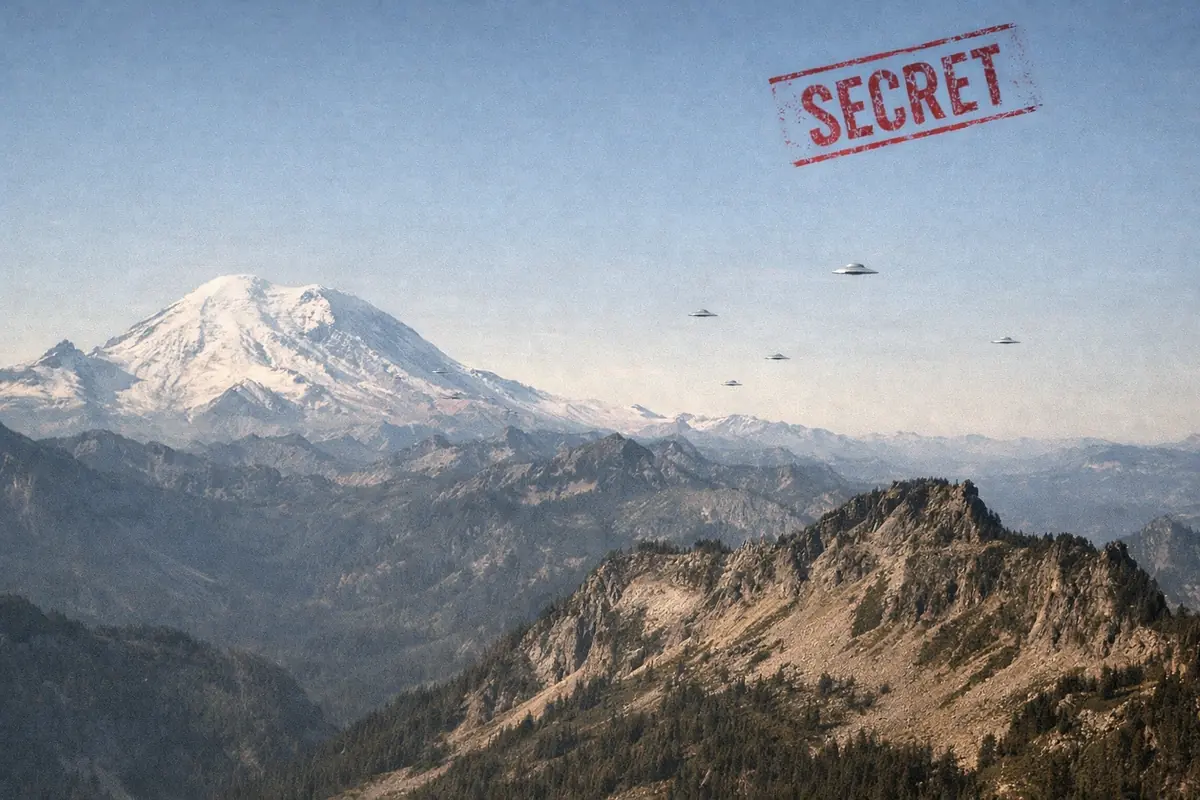
Kenneth Arnold Sighting
June 24, 1947 · United States
Arnold's June 1947 report mattered because it gave the postwar world the phrase flying saucer.
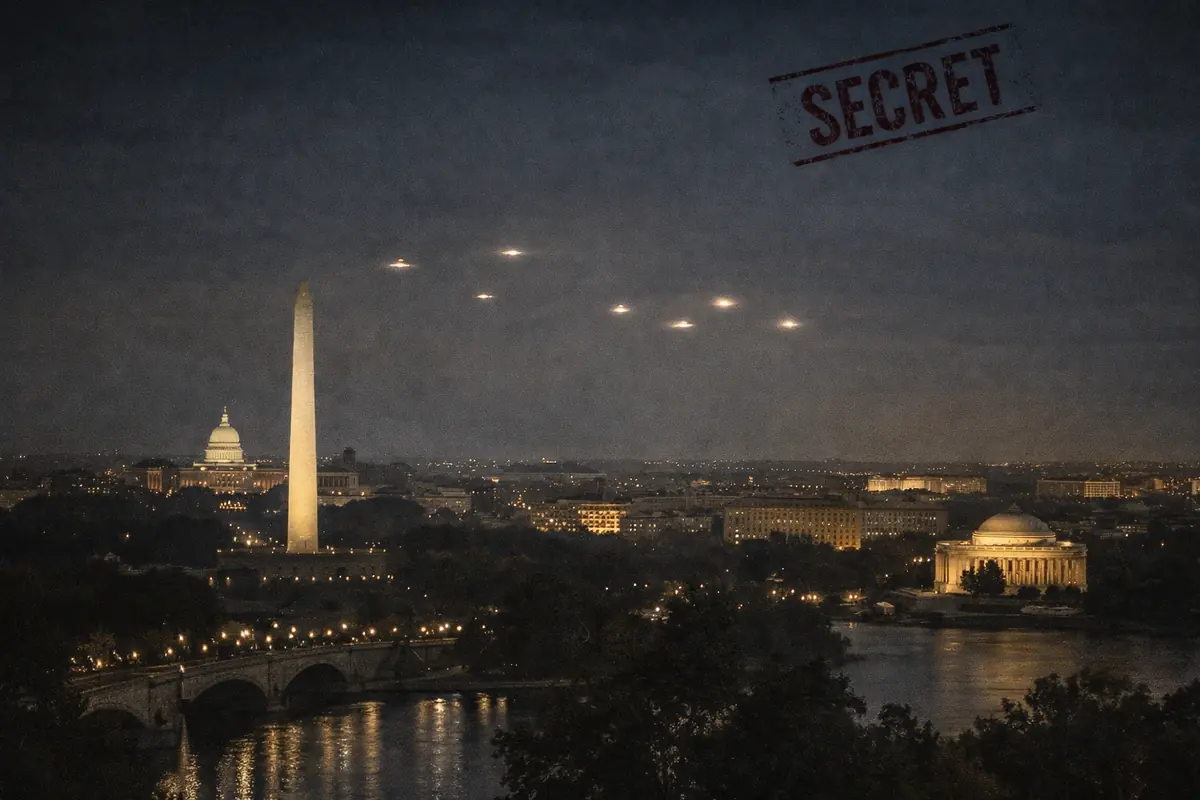
Washington D.C. Radar-Visual Wave
July 19, 1952 · United States
Washington 1952 put UFOs over the US capital and forced the Air Force to answer in public.
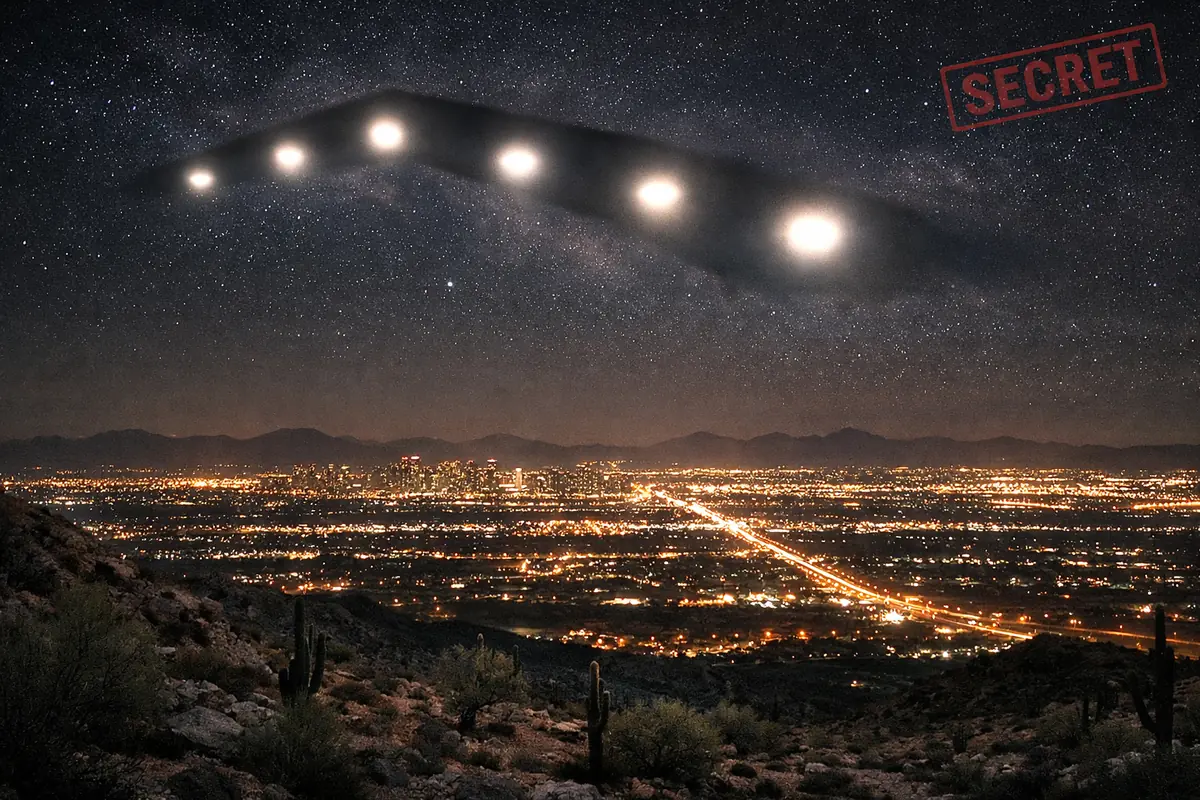
Phoenix Lights
March 13, 1997 · United States
Phoenix Lights lasted because one Arizona night seems to contain both a statewide transit and the famous stationary lights over the city.