Case file
Trindade Island
January 16, 1958 · Trindade Island, South Atlantic
From the Almirante Saldanha, a Brazilian Navy ship, accounts describe a Saturn-shaped object near Trindade Island. The photographs attributed to Almiro Baraúna made the case a classic, but their status remains disputed through technical analyses and later montage accusations.
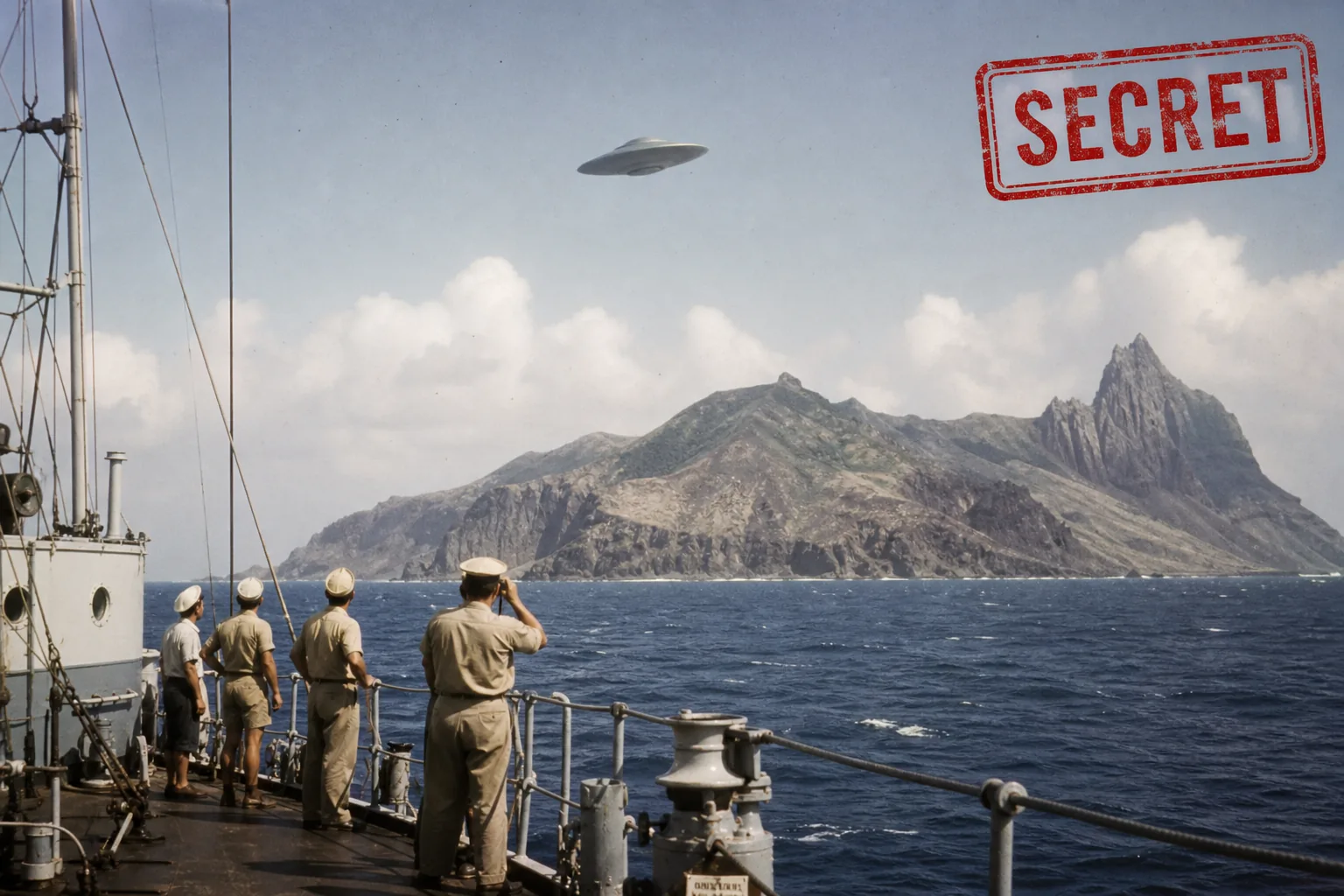
AI-generated illustration used to accompany this article.
Date
January 16, 1958
Location
Trindade Island, South Atlantic
Country
Brazil
Category
Naval photographic case
Status
Contested
Credibility
68/100
Notoriety
86/100
Coordinates
20.500° S · 29.333° W
Reading note
Why this file still matters
The file does not rest on a single claim. It combines a classic account of a deck sighting, photographs and naval interest with a long controversy over the witness chain, Baraúna's technical skill and the interpretation of the images themselves.
Timeline anchors
03
Distinct hypotheses
03
Sources used
05
Long summary
Narrative
A structured reading of the file, attentive to context, witnesses and the public circulation of the case.
On January 16, 1958, the Almirante Saldanha was near Trindade Island, an isolated South Atlantic landform. The ship belonged to a Brazilian naval setting, and the accounts connect its presence with scientific work during the International Geophysical Year. That restricted setting, far from a large urban area, is where the classic account places the sighting.
In that version, a dark object, often described as Saturn-like because of its ringed outline, was reported from the deck. Almiro Baraúna, a professional photographer on board, is said to have taken several frames. Favorable accounts stress rapid film development and the involvement or later examination of the photographs by navy personnel.
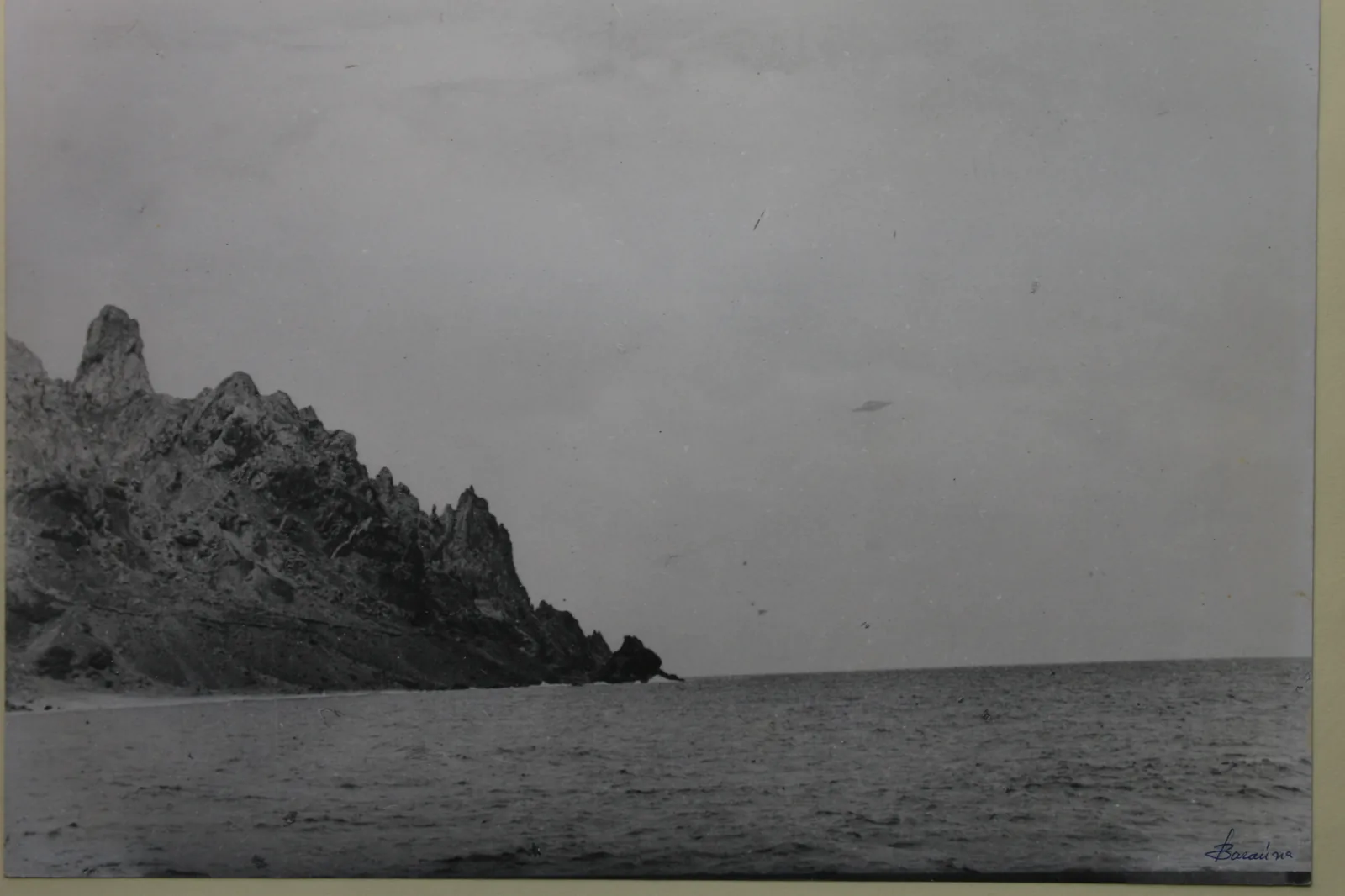
The case became famous because of those photographs. They give Trindade a different status from a purely visual sighting: the file presents itself as an archive to be examined. Yet that apparent strength also produces the central weakness. Once the image becomes central, Baraúna's technical ability, his earlier relationship to photographic trickery and the identification of witnesses become decisive.
Skeptical readings do not form a single explanation. Some examine whether the photographs could show an aircraft or a misread photographic effect. Others retain a montage hypothesis, especially after later accusations circulated in Brazilian ufological media. Favorable readings, by contrast, keep pointing to the naval context, the public release of the images and the examinations mentioned in the classic accounts.
Trindade remains important less because it closes the question than because it forces the question to be posed carefully. The reported event of January 16, 1958, the photographs attributed to Baraúna, claimed validations, technical criticism and late testimony have to be kept separate. As a media and documentary case the historical core is firm; the identity of the object remains contested.
Archive document
The historical photograph
This archive reproduction shows the image around which the case became famous, without treating it as definitive proof.
Timeline
Sequence of events
The steps retained here prioritize historical markers and the turning points in the public narrative.
Brazilian naval presence near Trindade
The Almirante Saldanha operates near the island in a scientific and naval context linked to the International Geophysical Year.
Sighting and photographs attributed to Baraúna
The classic account places the sighting on the ship's deck and attributes a sequence of photographs to Almiro Baraúna.
Publication and conflicting reappraisals
The images circulate publicly while later analyses divide between claimed authenticity, conventional hypotheses and allegations of montage.
Hypotheses
Interpretive frameworks
The hypotheses remain distinct from the factual narrative. They organize possible readings without erasing the blind spots.
Likelihood medium
Photographic montage
This reading emphasizes Baraúna's photographic skill, his earlier experiments with trick methods and accusations published much later. Its limit is that those accusations do not replace a complete documentary chain.
Likelihood medium
Conventional object or image effect
Technical analyses have tried to relate some frames to an aircraft or ordinary stimulus. This explains why caution is needed, but it does not automatically account for every part of the classic version.
Likelihood low
Object genuinely observed and photographed
The favorable reading relies on the naval context, reported witnesses and examinations described as favorable. It remains fragile because the public file does not stabilize every point of provenance, testimony and analysis.
Sources
Documents and references
Historical sources, reports, archives and books used to structure this file.
Trindade Island Photo Case
1958NICAP
Structured ufological summary used for the date, ship, naval context and classic version of the observation.
The Trindade Island photographic case of 1958
1958UFOs at close sight
Detailed compilation of the accounts, photographs and controversies around the January 16, 1958 sequence.
UFO over Trindade Island
2004Tim Printy
Skeptical reading useful for trick-photography hypotheses, documentary limits and problematic details.
The Trindade Island UFO Photos
1999Aenigmatis
Technical study focused on the first two photographs and on the aircraft or misread-image hypothesis.
Baraúna's nephew claims that the photos are fake
2011Revista UFO
Late and contested source, important for documenting the montage accusation without treating it as settled proof.
Related cases
Cases to connect
Neighbouring affairs by country, case type, or role in the public debate.

McMinnville Photos
May 11, 1950 · United States
McMinnville is a useful photographic comparison: two famous images, a long public afterlife and conflicting technical readings.
Washington D.C. Radar-Visual Wave
July 19, 1952 · United States
Washington 1952 offers another public file where the military institution itself becomes part of the story.

Tehran 1976
September 19, 1976 · Iran
Tehran 1976 extends the theme of an international military file with a different documentary profile.